Home · Discoveries
Discoveries
Things the official pages still surprise you with
A reused top strake with the wrong oarholes, a chine shared by two Norwegian ships, unidentifiable axe marks, and a sixth number that belonged to the longship.
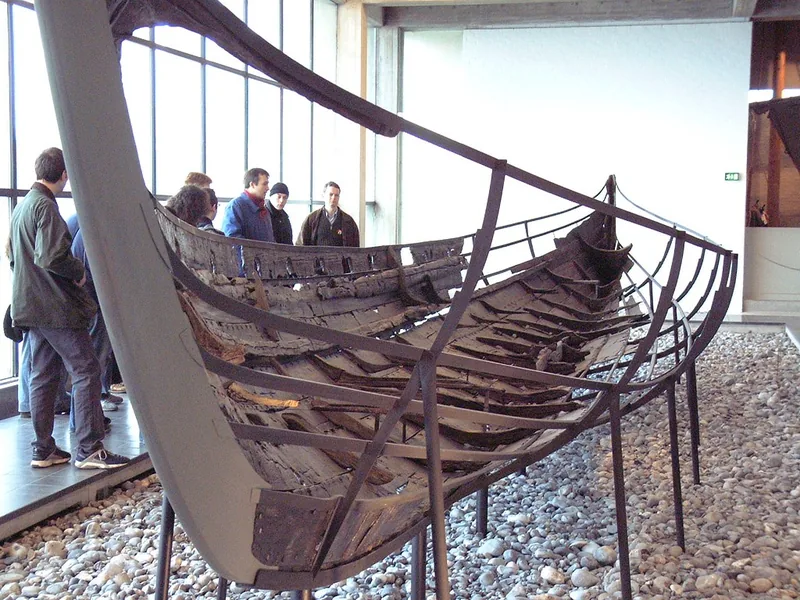
The wrong oarholes
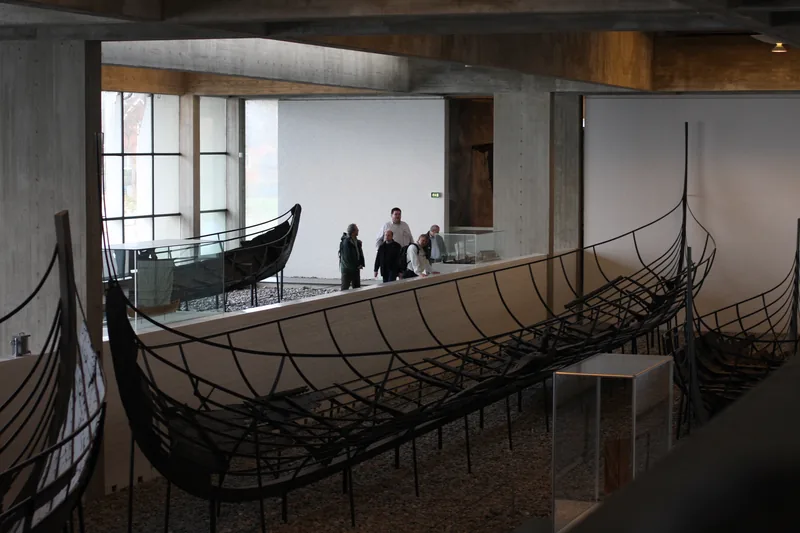
Skuldelev 5 is already unusual among the five, because it is built with both new wood and recycled timber, and repaired that way again a few years before it was sunk. The Helge Ask page adds a still stranger detail. At some stage the top strakes were damaged and replaced with those from another ship. The square oarholes in the “new” top strake did not line up with Skuldelev 5’s oar positions. In the wreck in the hall you can still see the fix: the square holes “were blanked off with wooden plates and new, round oarholes at the correct intervals were bored.” Helge Ask was built as the ship originally appeared, not as that later patchwork. [source] [source]
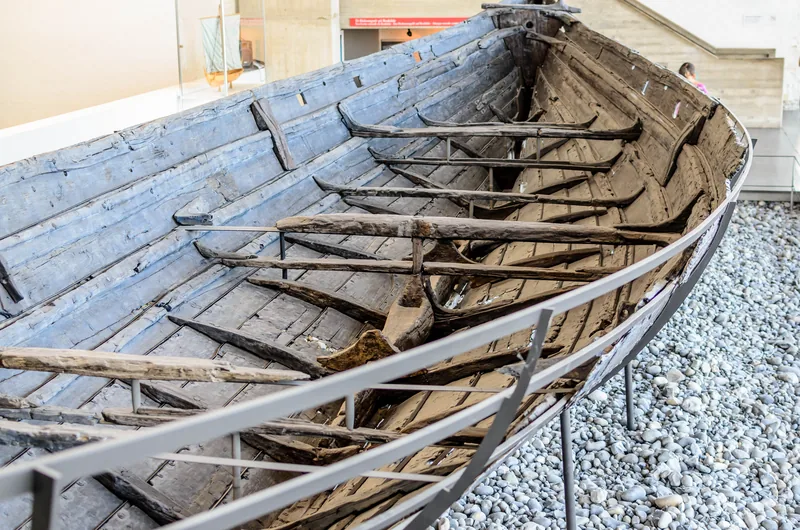
About 4 tons, and 4.6
Skuldelev 3 is the best preserved of the five, about 75 % of the hull, Danish oak, 14 metres long in the facts table. The prose says the open hold amidships had room for about 4 tons of cargo. The table on the same page says 4.6 tons. This desk does not pick a favourite, and it does not average them to 4.3. Official pages are allowed to talk in two registers at once. [source]
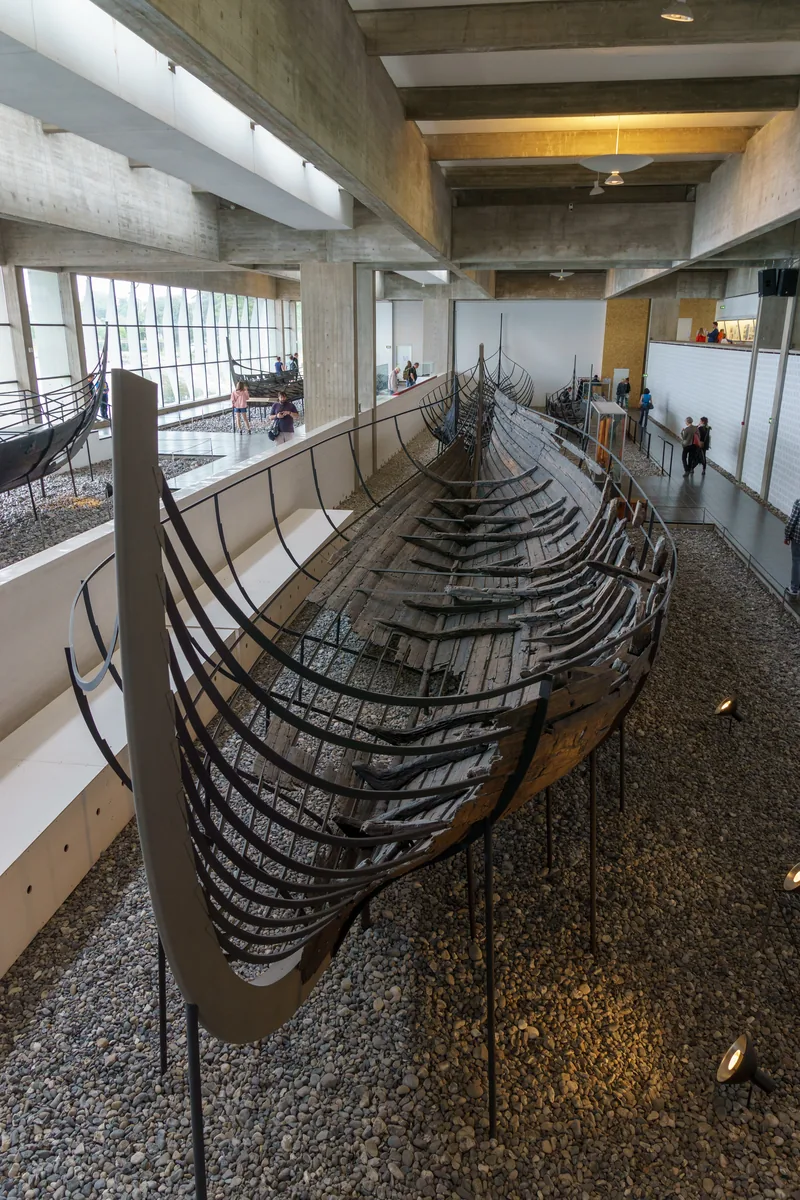
A family feature under the waterline
Skuldelev 1 and Skuldelev 6 both come from the Sognefjord area. The fishing-boat pages say they were built at the same time and place, and that they share a special longitudinal change in angle, the chine, along the bottom of the boat under the waterline. The Kraka Fyr page also says the original fishing boat had a hull “virtually self-supporting — almost like an eggshell,” with loose thwarts for the rowers, later raised with a seventh strake into something like a “byrding”, a boat that carries something. Kraka Fyr itself is still in the original fishing shape. [source] [source] [source]
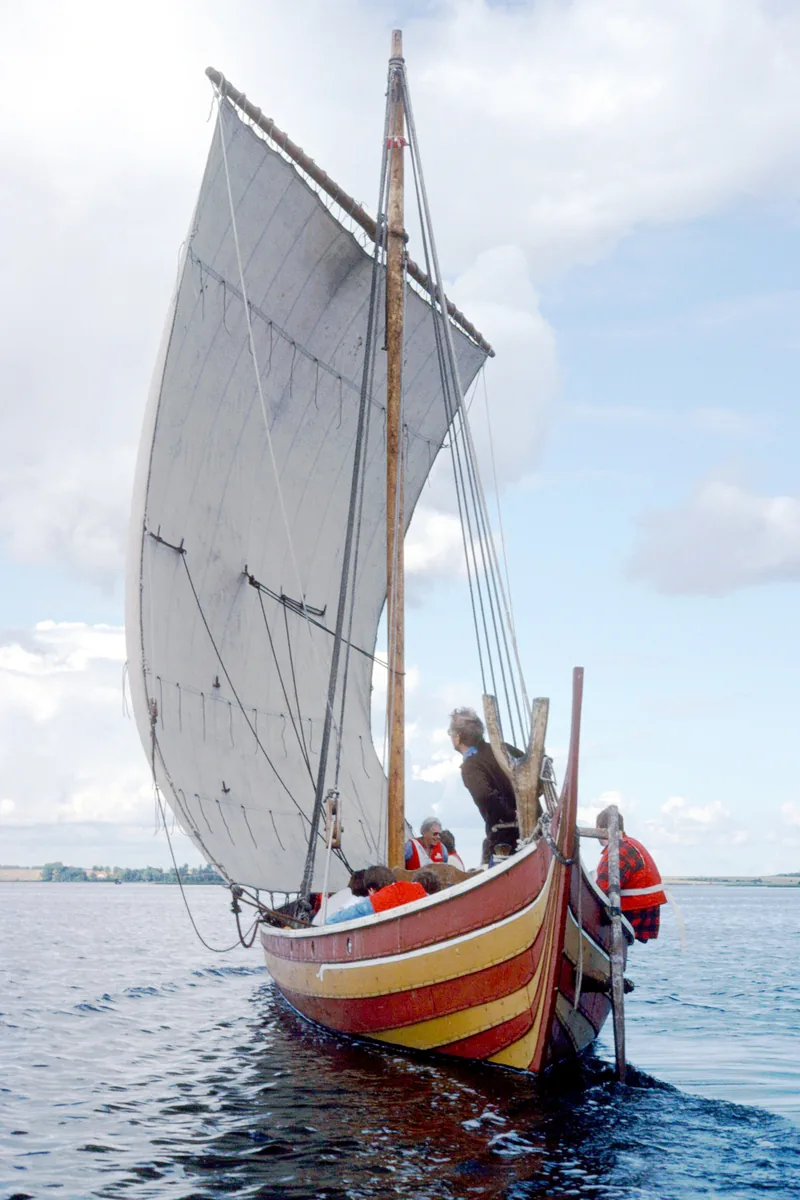
Axe marks, and a dragon it probably would not have worn
While building Ottar, the reconstruction of Skuldelev 1, the boatbuilder found “some unusual and unidentifiable axe marks on a biti.” The reconstructions, the museum is careful to say, are not definitive truths. They are suggestions. [source]
Helge Ask, as the first museum reconstruction, is decorated with colour and carving. On festive occasions a dragon head is secured to the prow and a tail to the stern, “even though a warship of this modest size would hardly have flourished such a big-ship embellishment.” It has not been possible to discover traces of paint on the Skuldelev ships themselves. The decoration is a suggestion with a warning attached, which is the most useful kind. [source]
The ship that was numbered twice
The excavation map still shows the misinterpreted ship number 4. Parts classified as ship number 2 and ship number 4 were parts of the same ship, the Skuldelev 2-ship, the largest in the barrier and the one most damaged by currents and ice. Once that was understood, the barrier consisted of five ships. The longship from Dublin had been so broken that it had looked like two. [source]
Enjoyed this desk on five ships, a barrier in a fjord, and a sixth wreck that was never a sixth wreck?
No pop-ups. No intrusive advertising. Just interesting stuff. A little support helps the next nautical.im site get built.